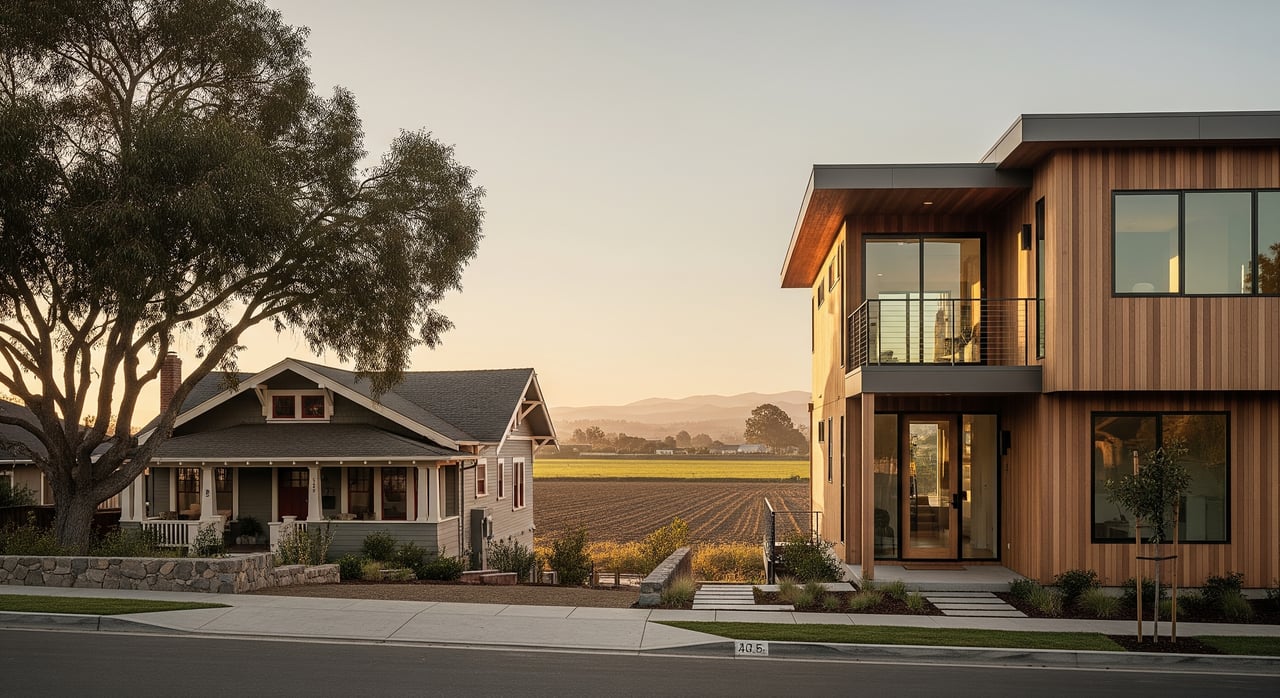
Trying to decide between a brand-new home and a resale in Watsonville? You are not alone. With limited inventory across Santa Cruz County and a mix of older neighborhoods and newer fringe development, it can be tough to know which path fits your budget, timeline, and lifestyle. In this guide, you will learn the key differences in cost, taxes, timelines, warranties, inspections, and long-term value so you can buy with confidence. Let’s dive in.
Watsonville market snapshot
Watsonville offers a range of housing, from classic bungalows and ranch-style homes to newer subdivisions on the city’s edges and nearby Pajaro Valley. New construction is more limited than in larger metro areas, and many larger projects appear on the outskirts. Resale inventory can be competitive during seller’s market periods, which affects pricing and negotiation.
Builders often price new homes at a premium over comparable resales, especially when inventory is tight and buyers value new systems and finishes. Your commute and daily routine matter here too. Access to Highway 1 and CA‑129/152 can be a big factor if you work in Santa Cruz, Salinas, Monterey, or the Silicon Valley corridor.
Local site conditions should be part of your due diligence. Parts of the Pajaro River floodplain carry flood risk. Watsonville is in a seismic zone, and older homes may need retrofits while new homes must meet current building codes. Near farmland, you should expect occasional agricultural activity, truck traffic, and potential odor or dust.
New construction in Watsonville: what to expect
Price, premiums, and incentives
New homes typically come with a higher base price. Many builders also charge for upgrades, lot premiums, and landscaping that can raise the final cost. Incentives like closing cost credits, interest rate buydowns, or upgrade packages may be available, but they vary by market conditions and the project phase.
HOA rules and Mello-Roos
Many new subdivisions include an HOA that handles landscaping and common-area maintenance. Dues vary by community and can rise over time. You should review budgets, reserve studies, meeting minutes, CC&Rs, and any pending litigation before committing.
Some new neighborhoods in California use Mello-Roos Community Facilities Districts to fund infrastructure. If present, this appears as a special tax on your property tax bill and can add hundreds to thousands of dollars per year. Always verify the presence and amount during escrow and on county tax records.
Timelines and process
Expect a longer path to move-in. If you buy during the model or pre-sale phase, delivery can be months or more than a year. Build periods often range from 4 to 12 months depending on product type, permitting, and weather. Plan for potential delays and keep your lease or current housing timeline flexible.
Financing options for new builds
You can use a standard mortgage for many new homes. Some buyers use construction-to-permanent loans, and builders may offer incentives with preferred lenders. Appraisals will consider comparable new inventory and may treat upgrades differently than the base model. If you are customizing, budget for higher down payment needs and interim steps.
Warranties and inspections for new homes
Most builders provide tiered warranties that commonly cover workmanship and materials for about 1 year, major systems for around 2 years, and structural components for 5 to 10 years. The exact scope, exclusions, and claim process vary, so review the documents closely.
Even with new construction, you should still order an independent home inspection before closing. Do a detailed final walkthrough, document punch list items, and verify the certificate of occupancy and county inspection records. This helps you address issues while warranty leverage is strongest.
New construction pros and cons
- Pros
- Customization of finishes and floorplans before build completion
- Modern systems, energy efficiency, and new-home warranties
- Lower immediate maintenance
- Cons
- Higher purchase price and added upgrade or lot premiums
- Longer timeline and potential delays
- HOA dues and possible Mello-Roos
Resale homes in Watsonville: what to expect
Pricing and negotiation
Resale prices are set by comparable sales and local demand. In a balanced or buyer’s market, you may have more room to negotiate price, credits, or repairs. In a tight market, strong offers and shorter contingency periods are common.
Property taxes and reassessment
Under California’s property tax system, assessed value typically resets to the purchase price at sale. That means your property tax bill may be higher than the seller’s, especially if they benefited from a long-held Prop 13 base. Resales outside of special districts may avoid new Mello-Roos, but always verify the tax roll.
Timeline and escrow
Resale transactions commonly close in 30 to 45 days, depending on financing and contingencies. You can usually move in immediately after funding, per your contract terms. This faster timeline can be a major advantage if you need housing certainty.
Inspections and disclosures
Order a comprehensive home inspection that covers the structure, roof, plumbing, electrical, HVAC, and pest or termite. In older homes, you may want specialized checks for lead-based paint, asbestos, and older wiring. Review seller disclosures, permit history, and the Natural Hazard Disclosure so you understand flood, seismic, and other local risks.
Resale pros and cons
- Pros
- Faster closing and occupancy
- Established neighborhoods and potentially larger lots
- Opportunity to improve value through targeted renovations
- Cons
- Immediate repairs or system replacements may be needed
- Older features may reduce energy efficiency
- Less predictable maintenance costs in the first years
Location and long-term value in Watsonville
Neighborhood and commute factors
Buyer demand often follows commute patterns to Santa Cruz, Monterey, Salinas, and Silicon Valley. Proximity to Highway 1 or CA‑129/152 can support long-term liquidity. Access to retail, medical services, and daily amenities also matters for many buyers.
Environmental and agricultural adjacency
Properties near working fields can experience truck traffic, odor, dust, or nighttime activity. If you are sensitive to these factors, visit at different times of day. In flood-prone areas, confirm whether flood insurance is required and review FEMA flood maps during your due diligence.
Lot size and outdoor space
Established neighborhoods may offer larger lots and mature landscaping. New production homes often have smaller lots but more modern layouts and systems. Consider which tradeoffs fit your lifestyle and maintenance preferences.
Costs you will carry beyond price
Ongoing fees and assessments
- Property tax based on your new assessed value
- HOA dues where applicable, which can rise over time
- Special assessments, including any Mello-Roos, if present
- Utility and local fees such as stormwater or sewer maintenance
One-time and near-term expenses
- New construction: upgrades, lot premiums, landscaping, and potential move-in or connection fees
- Resale: immediate repairs and maintenance for items like roofing, HVAC, plumbing, or electrical updates
Which path fits your goals
- Choose new construction if you want low-maintenance living, modern energy-efficient systems, and the ability to personalize finishes, and you have flexibility on move-in timing.
- Choose resale if you need to move sooner, value established neighborhood character or larger lots, or plan to renovate selectively to build equity.
Many buyers blend these priorities. You might target a slightly newer resale to get modern systems without the full builder premium, or pursue a quick-closing new home that is already nearing completion.
Watsonville buyer checklist
Before you make an offer
- Compare active listings and recent sales to understand premiums for new builds versus similar resales.
- Confirm school boundaries with the Pajaro Valley Unified School District for the specific address.
- Review the preliminary title report for easements, liens, and any special districts such as Mello-Roos.
- Read all seller disclosures for resales or builder disclosures and public reports for new subdivisions.
- Check Santa Cruz County permit records for unpermitted work or open permits.
Inspections and specialists
- Hire a licensed home inspector and a pest or termite inspector.
- For new homes, schedule a third-party inspection before final acceptance, and verify the certificate of occupancy and inspection sign-offs.
- If near agricultural land, discuss environmental and drift considerations and learn about local notification practices.
Financing and cost planning
- Ask your lender how HOA dues and any Mello-Roos will affect your debt-to-income ratio.
- For new builds, request a detailed list of upgrade costs and a clear change-order process.
- Budget for immediate maintenance on resales or landscaping and window coverings for new homes.
Legal and contract review
- Have your real estate agent review builder contracts and CC&Rs with you, and consider legal counsel when appropriate.
- Pay attention to dispute resolution, contingency timelines, and schedule or liquidated damages language.
How a local, integrated advisor helps
Choosing between new construction and resale in Watsonville is easier when your agent understands both the housing stock and the financing. With combined real estate and mortgage expertise, you can align your budget, loan strategy, and timeline from day one. A single point of contact helps you compare true monthly costs, including HOA dues and any Mello-Roos, and plan for upgrades or repairs with confidence.
You also benefit from neighborhood-level guidance on commute routes, agricultural adjacency, flood and seismic considerations, and community governance. That kind of practical, boots-on-the-ground insight can save time and reduce surprises.
Ready to explore your options in Watsonville with a trusted local who can guide both the home search and the mortgage conversation? Reach out to Sergio Ruiz to schedule a free consultation. Hablo español.
FAQs
Do new homes in Watsonville always appreciate faster than resales?
- Not always; appreciation depends more on location, lot, community reputation, and broader market trends than on newness alone.
How much can Mello-Roos add to a Watsonville property tax bill?
- It varies by district and can range from a few hundred dollars to several thousand per year; verify the exact amount during escrow and on county tax records.
Can I use a standard mortgage for a new construction home in Watsonville?
- Yes; many buyers use conventional mortgages or construction-to-permanent loans, and builder-preferred lenders may offer incentives.
Are builder warranties for new homes reliable in Santa Cruz County?
- Many reputable builders stand behind them, but coverage and enforcement vary; review warranty documents and who backs the structural warranty.
Should I waive inspections on a Watsonville resale to be more competitive?
- It is not recommended; inspections help uncover costly issues, and even new homes benefit from an independent inspection at the final walkthrough.
How do property taxes change when I buy in Santa Cruz County?
- Your assessed value typically resets to your purchase price at closing for both new and resale homes, which can increase the property tax bill compared to the seller’s prior base.